


New research publication: The Increased Likelihood of Identification as EU Citizens among Critical Yet Positively Minded Young Digital Users
- teagolob5
- Apr 7
- 1 min read
New research paper on EU Citizenship, youth and digitalisation trends was published by Prof. Dr Mateja Rek, Prof. Dr Tea Golob and Prof. Dr Matej Makarovič. It feeds directly into the research activities of the IC4EU.
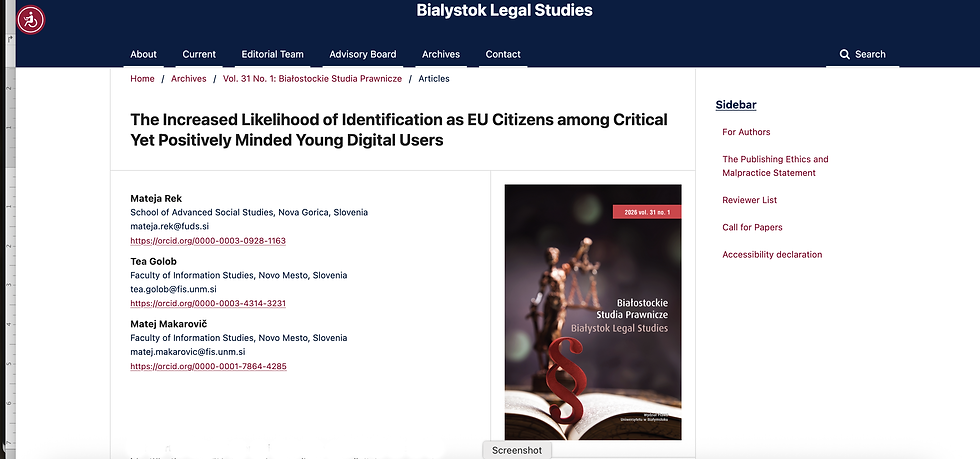
In this article, we provide empirical evidence demonstrating that both identification with EU citizenship as well as active digital engagement depend significantly on young people’s abilities as critical thinkers. More specifically, we demonstrate that critical yet positively minded young people are more likely to identify as EU citizens. Such healthy sceptics are also more likely to report that they know their citizens’ rights and obligations and claim to be well informed about EU decision-making. We provide a more detailed analysis by distinguishing between four categories of youth digital users based on variety in their critical thinking modes and their identification as EU citizens; they can be described as rejecting, engaged, trusting or disinterested. They vary in their level of digital media use, modes of critical thinking, fact-checking and EU identification. We offer evidence indicating that the category of engaged youth demonstrates digital literacy traits that contribute to fostering digital citizenship. In other categories, there is ample opportunity for the enhancement of digital literacy skills. We offer empirically based guidelines tailored to the unique needs of the different groups of youth digital users that we have identified.


Comments